
The Problem With Engineering Thinking
Why what works doesn't always work

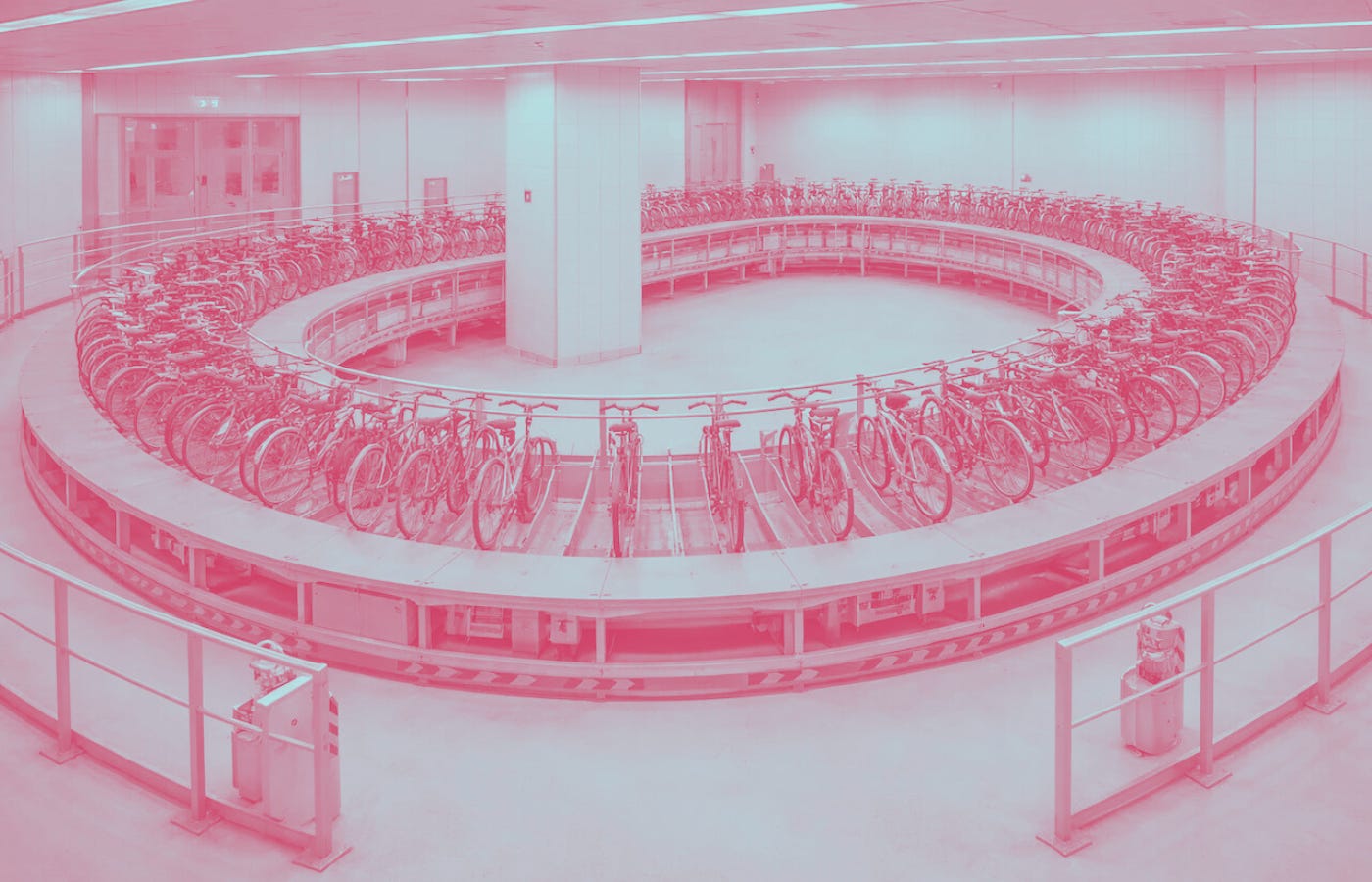
I grew up in a place where things work, and where working is treated as a moral good.
In Finland, systems tend to do what they are supposed to do. Trains arrive on time, forms make sense, and everyone follows the rules. Infrastructure is repaired long before it starts to fall apart. Even baby pajamas are designed with zippers that allow you to change a diaper without undressing the child completely. You grow up trusting that if something exists, it was designed deliberately by someone who knew what they were doing. An Australian friend once described Finland as a country built by engineers, while many other countries (including his) were built by pioneers. At the time, I took that as a compliment.
For a long time, I assumed this was simply how the world should be. I thought that progress meant fewer gaps, fewer surprises, and fewer situations where manual steps were needed. A good system often removed the need for human judgment because it had already anticipated every possible outcome, allowing you to just go with the automated flow. Only after moving abroad did I start to think about what it really means for something to “work”.
Portugal, where I now live, was the first place where this difference became obvious. Things here don’t always work in the way I am used to. Processes, if they exist, tend to bend or break down. Appointments start when they start. When something breaks, the system does not rush to fix itself. Instead a person steps in to explain, shrug and solve your issue, or leave it unsolved. When there’s no technical way of filling a gap it’s filled socially.
A while ago we wanted to enroll our daughter for swimming lessons at the local pool. The secretary helping us was clearly overwhelmed and visibly annoyed, and she explained that she and her colleagues tracked sign-ups in a shared notebook. A physical notebook with handwritten entries passed between three people. In my work, using a spreadsheet to track things is these days considered outdated, so hearing this felt like we were time traveling in the wrong direction. After spending an hour at the counter, the sign-up process was completed and the flustered secretary had warmed up to us. It took months to receive our daughter’s membership card, a piece of plastic I’ve seen printed out in seconds in other places. The whole process felt inefficient in ways that made my eye twitch.
I’m still in the process of getting used to this. Hailing from a Nordic country and living in Canada for over a decade trained me to expect a clear connection between effort and outcome. Here the amount of preparation might not increase your chances in succeeding. You can do everything right and still wait for hours or have to come back another day. But over time I’ve started noticing something else.
Getting bread from our local bakery is never quick, because the place is always full of people. But it is also where you see all the familiar faces from the neighborhood. Bringing the kids with us guarantees a conversation with a stranger. Seeing someone you know on the street always means stopping for a chat, even when you need to be somewhere. Time stretches to what sometimes feels like an infinity (to a Nordic person), but it stretches for people.
Some types of inefficiency are just frustrating and don’t bring anything meaningful to the table. The swimming pool could track sign-ups in a spreadsheet without losing anything human in the process. Waiting three months for a membership card that could be printed in minutes wastes time that some people can’t afford to lose. But I have also come to believe that inefficiency can play a role in how people relate to one another. It creates small moments of patience and shared understanding. It makes it easier to give grace, because everyone has experienced the same delays and imperfections. When no one can hide behind a process, you are forced to acknowledge the person in front of you.
When I lived in Canada, I used to visit the Finnish consulate on a regular basis for passport applications and renewals. Everything always worked perfectly and I was usually out in minutes, thanks to the efficient Finnish clerks. On one visit, something genuinely did not work. The clerks had to call their supervisor, and I could see that they were panicking. The ordeal ended up taking way longer than normally, but something else happened: we talked, laughed and shared personal experiences about living in Canada while we waited. It was the first real human interaction I ever had in that building. The system worked beautifully until it didn’t, and the moment it failed and people had to step in was the only moment I remember.
This Finnish ideal of a frictionless life is exactly what we are trying to build everywhere now with artificial intelligence. AI is the ultimate engineer. It is built to remove friction and make sure nothing slows down. It promises a world where decisions move faster and fewer people have to intervene. From the outside this looks like progress, but from the inside it sometimes feels like a foundational building block has gone missing.
Anyone who has gotten stuck in a loop with a customer support bot knows the feeling. The moments where an actual person would listen and explain are not there anymore because the they’ve been removed from the system requirements. AI pushes a way of thinking that works very well for infrastructure into places where people are still supposed to matter. We are inadvertently designing systems that function like a giant self-checkout: perfectly efficient, and completely lonely.
Portugal and Finland are both functioning societies, more or less. Both produce outcomes. They simply assume different things about what systems are for. One is built to remove the need for people to step in, while the other expects that they will. Growing up in Finland taught me how powerful well designed systems can be, but living elsewhere has shown me what those systems sometimes forget.
When we went back to the pool weeks after that chaotic enrollment process, the same woman was sitting in her booth. This time she waved at us and smiled. She recognized my daughter and asked how the swimming was going. Later, after a long wait at the post office to pick up a package, an older clerk noticed my last name and asked if I was Finnish. He said he had never been there but would like to go one day, and we talked for a while. Not exactly efficient, especially for the people waiting in line behind me, but it was real.
AI works. The harder question is whether a world built entirely around what works still feels like a place meant for people.
Thank you Kaisa for this lovely post. The last paragraph really struck home for me. If we are using AI to help build a better world, who exactly is it going to be better for? And how? 🙏
I love this on so many levels.
First, you articulated something about Finnish culture that I have always sensed but could never put my finger onto: the expectation of seamlessness. And if you disrupt that, you're a problem. Even though there is something similar going on in a lot of Germanic cultures - I grew up between the two - the Finnish one takes it much deeper; it applies to human behaviour too. Germans (and Luxembourgers) *love* to complain precisely when the systems don't work as they're supposed to; in Finland even that is frowned upon - you're just supposed to fix things seamlessly, any unnecessary mention of the problem is also seen as a disruption.
Thank you for chrystallising that for me :)
And second, I love how you tie this in with an engineering mindset and our mindless drive for automation, without stopping to ask what the wider implications are.
Lastly, I love how you arrive at "different doesn't necessarily mean worse or better - it's just different, with different pros and cons". I wish more people could recognise this when looking at how different societies and cultures around the world work! I suspect that would help us have far fewer conflicts...